
Italian Builder Demonstrates Custom Steel Construction Competes With Fiberglass in Compact Segment
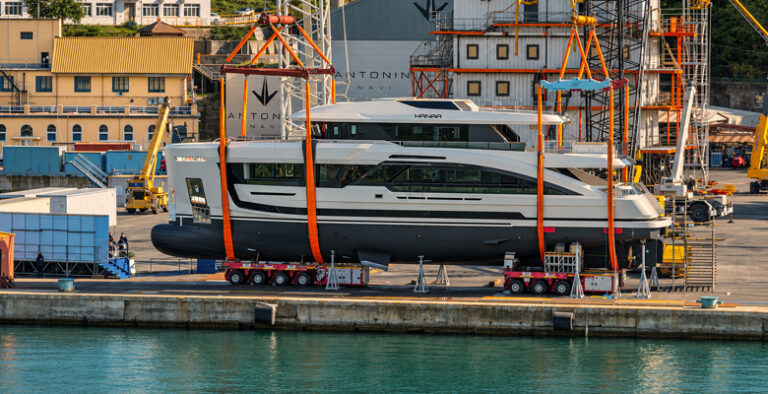
Antonini Navi has launched Hanaa, a steel-hulled superyacht that challenges the prevailing assumption that fiberglass dominates the smaller superyacht market. The Italian builder set out to prove that owners seeking fully custom vessels still value steel construction, even in compact sizes where fiberglass has traditionally held sway. The launch represents a deliberate strategic move by the shipyard to capture a niche of discerning clients who prioritize bespoke design and the durability of steel over the cost advantages of composite materials. The Hanaa project emerged from conversations between Antonini Navi and its design partners at Hot Lab and Hydro Tec, who collaborated to create a vessel that showcases the possibilities of steel construction at a scale where such builds remain relatively uncommon. The design philosophy centered on maximizing interior volume and customization potential, two areas where steel offers distinct advantages over fiberglass. Steel allows for greater structural flexibility, easier modification during construction, and superior longevity in demanding cruising conditions.
For superyacht owners accustomed to the flexibility of fully custom builds, the Hanaa demonstrates that the steel option need not be relegated to larger vessels or expedition yachts alone. The launch timing is significant, arriving at a moment when the superyacht market is increasingly fragmented by owner preferences. Some buyers prioritize speed to delivery and standardized layouts; others demand complete customization and are willing to invest in longer build cycles to achieve their vision. Antonini Navi positioned Hanaa squarely in the latter camp. The collaboration between builder and designers highlights how Italian shipyards continue to innovate within traditional construction methods. Hot Lab and Hydro Tec brought contemporary design sensibilities to the steel platform, ensuring that Hanaa does not feel like a relic of older construction practices but rather a modern interpretation of time-tested principles. The result is a vessel that appeals to owners who view their superyacht as a long-term asset rather than a fashion statement.
Industry observers note that Antonini Navi's move reflects broader market dynamics. While fiberglass production has scaled up significantly in recent years, particularly among Turkish and Asian builders, the Italian shipyard sector has largely maintained its focus on steel and aluminum construction. This specialization has allowed yards like Antonini Navi to develop deep expertise in custom steel builds, creating a competitive advantage that extends beyond mere cost considerations. Owners who have invested in steel superyachts often cite superior resale value, easier maintenance, and the ability to undertake major modifications without structural compromise. The Hanaa launch also signals confidence in the market for smaller superyachts in the 40 to 50 meter range. This segment has seen increased activity as ultra-high-net-worth individuals seek vessels that offer superyacht amenities and performance without the operational complexity and crew requirements of larger ships. Steel construction in this size range allows builders to offer features such as reinforced hulls for expedition cruising, larger fuel and water capacity, and more robust mechanical systems, all of which appeal to owners planning extended voyages.
Antonini Navi's positioning of steel as a viable alternative to fiberglass carries implications for the broader superyacht industry. If the Hanaa proves successful in the market and generates additional orders, other builders may reconsider their material strategies. Instead, Antonini Navi argues that the value proposition of steel, when properly marketed and designed, justifies the investment for a specific clientele. The launch of Hanaa underscores a fundamental truth about the superyacht market: it is not monolithic. Owners have diverse priorities, and builders who understand and serve those distinct preferences will continue to thrive. Antonini Navi's decision to invest in a fully custom steel build at a compact size reflects confidence that demand exists for such vessels among owners who value craftsmanship, durability, and the freedom to customize every aspect of their superyacht. As the market continues to evolve, the Hanaa may well become a reference point for future builds in its class, proving that steel construction remains not merely viable but desirable for a meaningful segment of the superyacht-buying public.
This article has been sourced from press releases and cross-referenced with multiple websites. Facts originally seen at Source.